
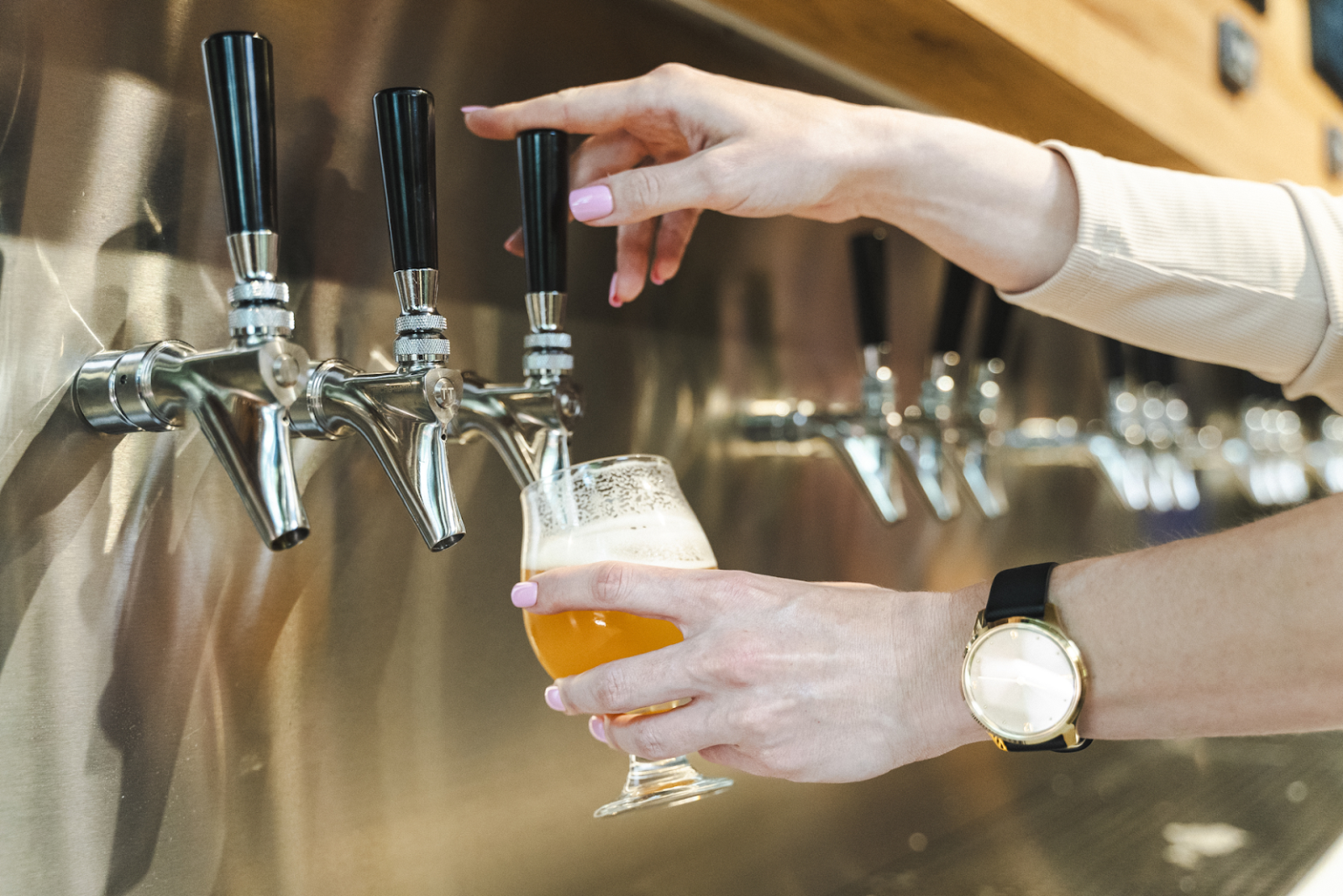
Your tap is pouring 30 feet away from the keg. Beer lines wind their way through warm spots in your venue. But thanks to glycol, the beer pours cold and crisp.
Kegs can’t always sit behind the bar. Space constraints sometimes force bar owners to store their beer 30, 50, or even 100 feet away from the tap. Long-haul systems, or lines longer than a standard 25-foot run, need glycol to cool the beer when it’s stored in a different part of the building.
Glycol chillers are refrigeration units that circulate chilled liquid through your draft beer system lines. Their cooling capacity keeps the temperature consistent from keg to tap, which stops warm spots from messing with your carbonation, flavor, temperature, and foam control. Long-draw systems need this. Without it, you can’t keep beer as cold as it travels from the cooler to the tap.
Most commercial glycol chiller systems run on propylene glycol. It’s a food-safe coolant that circulates at sub-zero temperatures without freezing. The glycol flows through trunk lines around your beer lines to keep everything cold, even when the beer’s traveling long distances through unrefrigerated spaces.
If you’re running a bar, restaurant, café, or any setup with self-pour taps or multiple lines, you need a glycol chiller.
The Role of Glycol Cooling in Draft Beer Systems
Glycol cools the space around the beer, not the beer itself.
The glycol refrigeration system chills propylene glycol between 28°F and 32°F. The chilled glycol is then pumped from a holding tank through insulated pipes parallel to the beer lines. As the glycol moves through the system, it picks up heat from the beer lines. This keeps the beer inside the pipes at a consistent temperature from storage to pour point.
The glycol then returns to the chiller, is chilled again, and circulates its way back through the system. This makes for a continuous flow of cold glycol, which is necessary to maintain temperatures across the entire draft beer system.
Water-based chillers can freeze at low temperatures, making them unreliable for draft systems that must operate at or near freezing. Glycol-based systems use propylene glycol, which remains liquid even at sub-zero temperatures. This means they can provide consistent cooling without the risk of lines freezing or equipment damage.
Glycol acts as a heat conductor that transfers cold from the chiller to the beer lines efficiently. It’s engineered specifically for industrial process cooling, which makes it perfect for high-volume environments like bars and pubs where fast, consistent performance matters.
The chiller is just one piece. You’ve still got kegs, beer lines, taps, control panels, and pour points. They all have to work together to get cold, properly carbonated beer from the cooler to the glass.
Why Temperature Stability Matters for Draft Beer Quality
Temperature stability keeps drinks cold and maintains texture and flavor consistency.
Draft beer is carbonated under pressure. This carbonation is sensitive to any temperature changes. When beer warms by just a few degrees, CO₂ comes out of the solution too quickly, turning pour-perfect into overly foamy. When beer gets too cold, it pours slowly and flat. That’s why draft beer systems require temperatures of 36°F to 38°F to work.
Glycol cooling systems keep beer within that narrow window of perfection across the whole line. Whether it’s the first pour of the day or last call, the temperature stays steady. This consistency means better carbonation retention, less waste per pour, consistent temperatures, and reliable flavor.
Without glycol cooling, long-draw systems warm easily, especially in lines that run through walls, ceilings, or any space that’s not air-conditioned. Those warm spots create foam, waste product, annoy bartenders, and disappoint customers.
Glycol reservoirs surround your beer lines with a never-ending flow of chilled liquid. No warm spots, no temperature swings. Just reliable, high-quality pours every single time.
Supporting Long Draw and Multi-Zone Self-Pour Systems
Commercial glycol chillers make it possible to scale up your draft system.
Without glycol, beer will get warm and flat by the time it’s poured. With it, operators can position kegs in a way that makes the most sense for the business.
Multi-zone beverage dispenser configurations allow venues with multiple tap walls and service bars to hook up to a single glycol chiller system in the basement. Glycol systems also enable crash cooling, which quickly brings kegs down to proper serving temperature. This allows larger venues to turn over new inventory quickly and get freshly tapped beer to your customers right away.
Reducing Waste Through Consistent Cooling
Unstable temperatures mean wasted money.
When beer lines warm up, foam increases. Bartenders wait for the foam to settle, top off the glass, and repeat. Most venues only get about 77.5% yield per keg. Foam and temperature problems take the other 22.5%. That’s roughly a quarter of every keg going straight to the drain.
In automated self-pour venues, that predictability is everything. Guests expect smooth, controlled pours when they’re serving themselves, so if the system pours extra foam, it reflects poorly on the venue.
Cooling stabilization also better utilizes draft inventory. Kegs pour clean, right to the very last drop. You’ll never have to blow the line out or toss the last of the keg because of temperature issues. For operators looking to maximize the benefits of beer walls or multi-tap setups, this improves operational efficiency and decreases costs.
Glycol Chillers as Essential Draft Infrastructure
Good draft systems stay cold from the first pour to the last.
Glycol chillers let venues reap all the benefits of beer walls without the drawbacks by keeping temperatures stable and reducing waste. They allow venues to offer self-pour options and multi-zone service and manage high-volume operations without sacrificing quality or consistency.
At PourMyBev, we design systems that put glycol cooling center stage. Our approach combines commercial glycol chillers, precision temperature controllers, and automated dispensers to deliver a hassle-free customer experience. We help operators make infrastructure decisions that support long-term success and profitability.
Ready to see how glycol cooling could work for your venue? Get in touch with our team to discover a self-pour system that’s perfect for your venue.