
Beverage dispensers, once a novelty, are becoming a staple in modern commercial venues. From infused water and custom coffee service to specialty soda fountains and craft beer taps, there are more options and configurations available than ever before. Not all beverage dispensers are created equal, however. While simple dispenser setups may serve low-volume or limited-use cases, high-traffic venues — bars, restaurants, office complexes, and stadiums, to name a few — need a system that supports efficiency, durability, and what your guests want when they visit your bar.
Here are five of the most common commercial beverage dispenser types and how they help you drive revenue, speed up service, and deliver an enjoyable experience every time.
1. Countertop Beverage Dispensers
Countertop beverage dispenser systems are compact units that dispense cold, hot, or carbonated drinks with minimal counter space. They supply products from a reservoir within the system, typically via a built-in dispenser handle or touchscreen interface. In quick-service and self-serve environments, they’re usually at the front counter or pickup area where guests and staff can quickly fill cups without using back-of-house labor. Self-serve layouts often pair a countertop soda machine with an adjacent glass dispenser and accessories to keep the drinks flowing fast when your bar is busiest.
Operationally, countertop hot- and cold-beverage dispensers improve speed by enabling fast, repeatable pours and refills. Portion-control options can also dispense right-sized servings based on the time it takes the machine to pour each glass (for example, small/medium/large) to reduce overages and protect your bottom line.
As more venues seek automated solutions that fit into tighter spaces, countertop configurations deliver the convenience of self-service and higher throughput without dedicating floor space to a full-size unit.
2. Under-Counter Beverage Dispensers
Under-counter beverage dispensers are installed beneath bars or serving stations and connect directly to taps, refrigeration devices, or pressurized lines to dispense drinks efficiently without cluttering the service counter. Unlike countertop units that sit in plain view, under-counter dispensers keep kegs, delivery mechanisms, and refrigeration out of sight while delivering drinks through sleek faucets or soda guns at the bar edge. They streamline workflow in high-volume venues by keeping drink service within easy reach of staff and bulky equipment out of view of guests.
Clean, uncluttered service areas preserve the vibe you want to create for your guests. With under-counter beverage dispensers, busy bartenders and baristas can focus on customer interaction rather than navigating bulky equipment. An enclosed design supports consistent delivery with minimal manual intervention, helping operators automate standardized pours and keep service consistent.
3. Wall-Mounted or Integrated Beverage Dispensing Systems
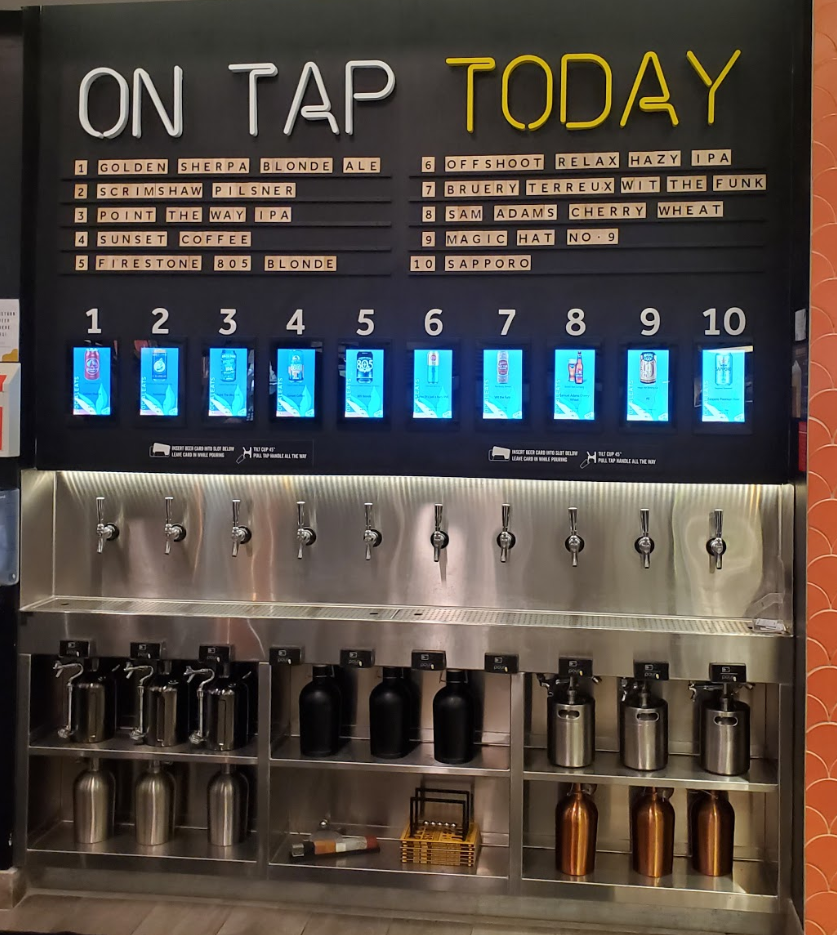
Wall-mounted and integrated beverage dispensing systems fit directly into built-in service stations, transforming wasted vertical space into efficient beverage service points without taking up valuable counter or under-counter space. These sleek systems feature touchscreen interfaces and configurable tap options, allowing venues to offer draft beer, wine, craft cocktails, cold brew, soda, and more from a single setup.
In busy bars, hotel lounges, taprooms, and multi-use venues like stadiums, self-pour beverage walls maximize space by seamlessly embedding beverage delivery into your existing walls. This strategy preserves countertop real estate for guest interaction and additional service functions while creating a polished, streamlined aesthetic.
One of the key operational advantages of wall-mounted dispensers is the ability to automate and organize control over pouring, payment, and inventory tracking. Using touchscreens that support multiple payment methods and integrate with POS systems, your staff can monitor how much is dispensed, simplifying sales tracking without putting more burden on your servers. The result is faster service, so your staff can focus on meaningful interactions with guests.
4. Self-Serve Beverage Stations (Customer-Facing)
Self-serve beverage stations enable patrons to interact directly with the dispensing system to pour their own beverages, typically using RFID cards, wristbands, or QR codes to activate pours and pay by the ounce. It’s an innovative setup that lets guests select and pour beer, wine, cocktails, and other draft beverages with little to no assistance from servers, creating a unique, simple “pour your own” experience that reduces wait times, drives throughput, and creates a memorable experience for guests.
A self-pour station is ideal for high-traffic environments such as bars, cafeterias, stadiums, and entertainment venues, where convenience and speed are critical. By eliminating the need for your servers to hand-produce every pour, a self-serve or touchless beverage dispenser takes the pain out of server shortages and keeps your staff focused on higher-value tasks like menu and drink recommendations and creating connections with your patrons that will make your bar feel like “their bar.”
With pour-by-ounce tracking and integrated POS connectivity, premium self-pour stations ensure accurate pour control and billing while reducing waste and product loss. Self-serve systems encourage a smooth, steady flow of pours, enabling faster service without sacrificing beverage quality or the standard of service you want to offer.
5. Networked or Fully Automated Beverage Dispensing Systems
Networked and fully automated beverage dispensing systems are the next evolution in innovative drink service. These digitally connected dispensers centralize management and analytics through cloud or IoT-enabled platforms. PourMyBev’s integrated technology and Pour Insights analytics platform let operators access real-time data on drinks poured, beverage popularity, inventory status, and changing customer preferences through a single, unified dashboard. With a connected infrastructure, you can make confident, data-driven decisions based on actual consumption trends instead of guesswork.
In high-volume hospitality environments like bars, food halls, and multi-venue entertainment spaces, these next-gen systems scale beverage service without compromising how you run your bar. Continuous data enables your managers to respond quickly to demand spikes, minimize waste from inconsistent pours, and proactively restock before shortages occur, and guests get disgruntled.
Choosing the Right Beverage Dispenser Configuration for Operational Efficiency
The right beverage dispenser configuration should align closely with your service standards, venue layout, and staffing strategy. A self-serve concept may prioritize space, automation, and labor efficiency, while an integrated or under-counter system can optimize speed and minimize movement behind the counter. High-volume venues should consider consistency, pour control, volume, and data visibility needs. When you match your selected dispenser type with the overall vision you have for your bar, you will naturally reduce operational friction, improve your margins, and deliver a memorable experience for each guest.
PourMyBev helps operators evaluate their unique needs to recommend the right system, backed by real-time data and automation. To explore which solution fits your goals, connect with the PourMyBev team today.